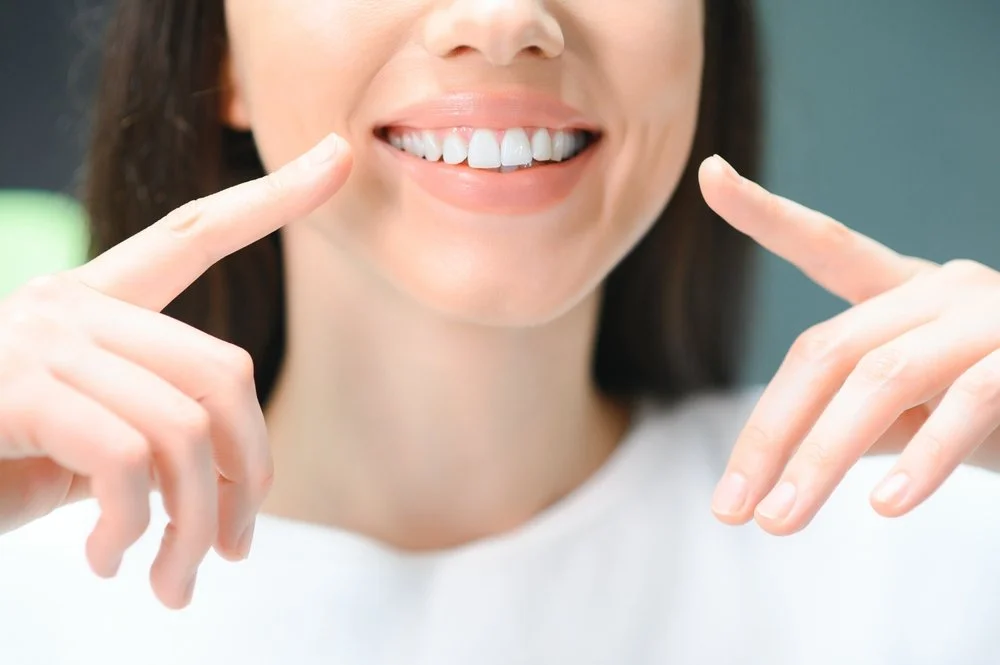
Does Whitening Toothpaste Work?
Ever go to the supermarket and see all the rows of new and improved and triple action whitening toothpastes and wonder – does this stuff actually whiten my teeth? Or will I be disappointed like Charlie Brown getting a rock in his stocking for Christmas? That is a very good question and the answer is…yes, they work, but slower and not as well as a professional whitening done in the dental office. Here is what whitening toothpaste actually does and how it works.
These toothpastes remove surface stains on the outside of the tooth, whereas professional whitening treatments actually penetrate into the dentin of the tooth (its interior) and change the color of that component.
Most whitening toothpastes have abrasive ingredients, like hydrated silica or calcium carbonate. That means they scrub against the surface of the tooth when you brush and like a mild sandpaper scrub away stains.
They can contain a substance called blue coravine. This chemical gives a bluish cast to the outside of the tooth, and being the opposite of yellow makes your teeth look whitish to the eye.
Overusing whitening toothpaste is not good! They can cause sensitivity (pain) if used for an extensive period of time due to the chemical and abrasive action. Some toothpastes are more abrasive than others. The Relative Dentin Abrasivity (RDA) is an acronym for this. The higher the number the more abrasive! People with sensitive teeth should look for toothpastes with a lower RDA (eg. Sensodyne Pronamel Gentle Whitening).
One can expect modest results with a few weeks of twice daily brushing
So that in a nutshell are the facts about whitening toothpaste. Since they actually do affect your teeth, physically and chemically, it is recommended to use whitening toothpastes only for a short period of time before returning to regular toothpaste, i.e. a few weeks. Happy brushing! -ProDentalFx, LLC